Skip to content
Origem Viva
Fermentation Raw milk Processing Milk to spoon Our story Questions
Alentejo, Portugal
Origem Viva

Origem Viva, raw yogurt

Raw milk, living cultures and time.

unpasteurizedlivingartisanal

Handmade in Alentejo, Portugal

Begin the journey

The wisdom of fermentation

Origem Viva was born from a personal healing journey and a deep fascination with fermented foods. In fermentation, living cultures turn milk into a new food: easier to digest, gently tangy, and still alive.

pH6.7

Watch milk become yogurt

1 / 5

Fresh raw milk

Straight from healthy animals, never pasteurized. The cream rises naturally to the top.

Drag the slider or tap a stage.

lactase glucose galactose O

Lactose, split in two

Lactose is milk's natural sugar: two smaller sugars, glucose and galactose, joined together. To absorb it, the body has to split that bond with an enzyme called lactase. About two in three adults worldwide make less lactase after childhood.

Live yogurt cultures carry their own enzyme for the same job. They keep breaking down the lactose in the yogurt as you digest it, which is why live yogurt is easier for many people who struggle with milk.

What fermentation adds

Lactic acid gives yogurt its fresh tang. By making the milk more acidic, it also keeps unwanted microbes in check.

Proteins are partly broken down into smaller pieces, which makes them easier to digest.

Along the way, some cultures also produce B vitamins, vitamin K2 and other bioactive compounds.

Nature transforms. We simply give it time.

Watercolour of a cow standing in tall grass

Why we start with raw milk

Our yogurt begins with fresh, living raw milk: milk collected from healthy cows and goats that has not been pasteurized or otherwise processed. We call it living because it still carries everything the animal gave it.

What fresh milk carries

Enzymes made by the animal itself, such as lipase and alkaline phosphatase. Heat is what switches them off.

Every culture begins with life.

What heat changes

Pasteurization was introduced to make milk safer by killing harmful bacteria. The same heat also changes much of what makes fresh milk alive. Flip the switch to compare.

Watercolour of a glass bottle and a glass of milk
Raw Pasteurized
  • Native enzymesActiveLargely inactivated
  • Native microbesDiverse and aliveMostly eliminated
  • Whey and immune proteinsIn their native formPartly altered
  • Heat-sensitive vitaminsIntactSlightly reduced
  • Safety relies onHealthy animals, clean milking and constant coldThe heat treatment

That's why we take care at the source. The quality and safety of raw milk depend on healthy, well-kept animals, careful milking and proper handling at every step. For generations, many communities around the world chose to keep milk this way.

The oldest traditions often carry the deepest wisdom.

From fresh milk to your spoon

Follow the milk, step by step.

  1. 01

    Healthy cows and goats

    Cared for by farmers we trust, in a small local circle in Alentejo.

  2. 02

    Fresh raw milk

    Collected with care and kept cold. Never pasteurized.

  3. 03

    Slow fermentation

    Living cultures work through the milk at their own pace.

  4. 04

    Handcrafted yogurt

    Made by hand, one jar at a time.

  5. 05

    Your spoon

    A living food, ready to enjoy.

  6. Good food cannot be rushed.

Why Origem Viva

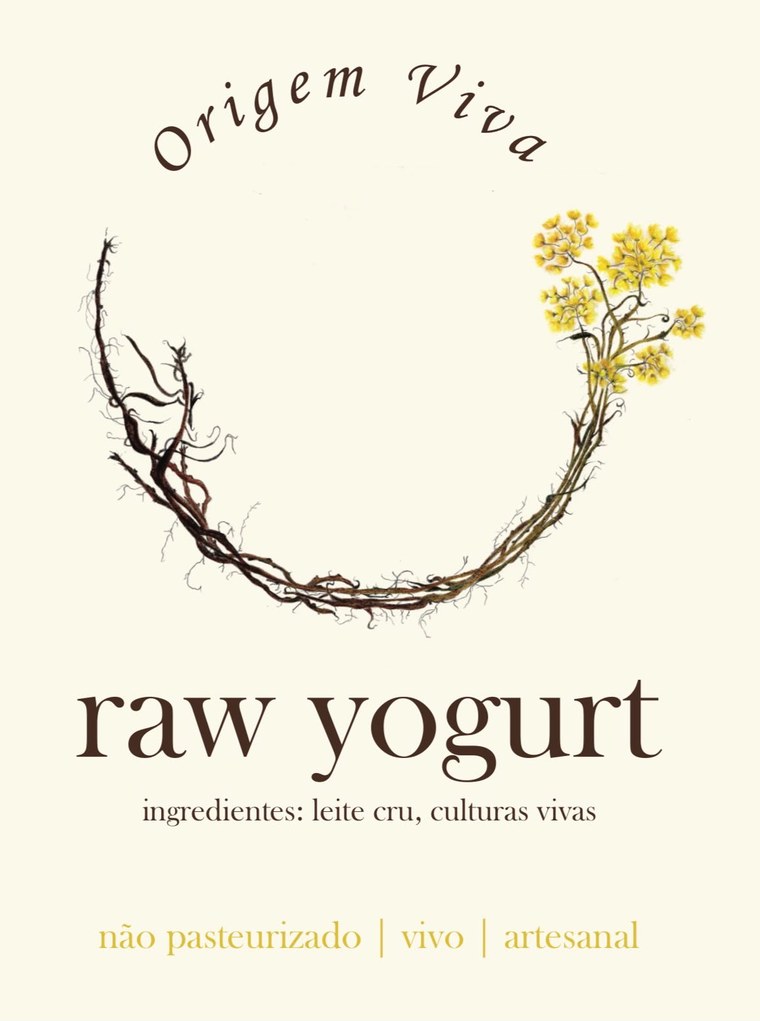
Look closely at the circle in our logo. It begins as roots and ends in flowers.

Origem

the roots

A return to the source: to the origins of food, to old traditions, and to milk as it was valued before modern processing changed its character.

The Origem Viva circle: roots growing into yellow flowers

Viva

the flowers

Life: the living qualities of raw milk, its native enzymes and microbes, and the vitality kept through careful fermentation.

Back to the living origin.

Every jar has a story

Fresh milk. Living cultures. Time. Care.

Every jar is made in Alentejo, Portugal, within a small local circle. The milk comes from cows and goats looked after by farmers we know and trust. One day, we hope to raise our own animals on a family farm.

Origem Viva raw yogurt label. Ingredients: raw milk, live cultures. Unpasteurized, living, artisanal.
Two ingredients: raw milk and living cultures.

For curious spoons

Is it really made with raw milk?

Yes. Our yogurt starts with fresh raw milk that has not been pasteurized.

Why does fermentation matter?

Fermentation turns milk into a different food. Living cultures use up part of the lactose, produce lactic acid and thicken the milk into yogurt.

Why don't you pasteurize?

We want to keep the milk's natural character, with its enzymes and native microbes, before fermentation begins. That's why everything starts with healthy animals and careful handling.

Why do texture and taste change from jar to jar?

It's a living food. Milk changes with the seasons and with what the animals eat, and the cultures keep working slowly even in the fridge, so the yogurt can turn a little tangier over time.

How should I store it?

Keep it in the fridge, ideally between 0 and 4 °C, and always use a clean spoon.

Is raw milk yogurt right for everyone?

Like every raw milk product, it is not recommended for pregnant women, young children, older people or anyone with a weakened immune system. If in doubt, ask your doctor.

Thank you

for supporting small-scale farming and real food made with patience.

Back to the living origin.

Back to the top